Architectural Aluminum Techniques

The Great Recession of the last decade took a severe toll on the construction industry in Florida. It forced many construction companies and those that supplied them out of business. It took courage and foresight, and a certain white-knuckle fearlessness, to weather the storm and come out whole on the other side. But for those that did survive, and were able to keep their core intact and maintain their reputation, there has been significant opportunity in recent years.

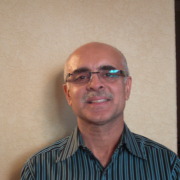
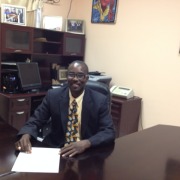
Architectural Aluminum Techniques (AAT) and its CEO and owner Sunil Tarneja weathered just such a storm and, with the help of his wife and CFO Sujata, key members of his management team and a group of CEOs brought together by the Florida SBDC at UCF in its CEO XChange program, he navigated the company through the Great Recession and on to a record year in 2013 when it recorded a 200% increase in revenues.

image

AAT is a sub-contractor to construction companies. It supplies architectural aluminum and steel engineered glazing systems that are often integral to the architectural style of an office building. They also often produce the materials that make up the unique architectural elements that make a building distinctive and memorable, such as the a 10,000 square foot outdoor balcony structure that juts from the Amway Center toward I-4 in Orlando, Florida, the Center’s 20,000 square foot glass entrance atrium facing Church Street or the modern glass and aluminum of the iconic UCF College of Medicine building. Architectural Aluminum Techniques had a hand in the construction of each of those remarkable buildings.

Founded in 1992 when Sunil and Sujata moved to Orlando from Toronto, Canada, AAT was built from a standing start, competitive bid by competitive bid. The company achieved break even in 1996 and enjoyed positive growth and profitability in the following years. They grew to be a multi-million dollar business with upward to 90 employees by 2009.

AAT was a success story indeed. Until the Great Recession hit, that is. Commercial construction tends to lag residential construction and when Sunil saw the dramatic decline in residential building activity in 2009, he knew there was trouble around the corner. Having felt the pain of the 1990 recession in Canada, he was prepared to do what was needed to save his company. In 2010 he slowly began downsizing the company, releasing good people because there was no work. 2011 was no better for AAT and the downsizing continued.

By 2012, Architectural Aluminum Techniques was down to its core team of 20 employees. For many of them, there was no work. Revenues had fallen precipitously to the point where they did not cover payroll. The times were dark and the future looked bleak. Fortunately, Sunil had learned from his experience during the Canadian recession, and had always run AAT very conservatively, making sure that it was financially strong with adequate cash on hand at all times. During 2012 he had to use some of those cash resources to make payroll. And he led an “all hands on deck” sales effort during the down times, having all of his employees calling clients and bidding on almost any deal they found.

It was during these difficult times in mid-2012 that Sunil brought his challenges to the Florida SBDC at UCF’s CEO XChange program. An executive roundtable program serving progressive chief executives and business owners, CEO XChange offers a confidential setting to discuss vital business issues, opportunities and trends with a group of peers and benefit from their experience and counsel. At the CEO XChange meeting, Sunil laid out his issues; he had battened down the hatches, cut overhead, downsized to his core employees but was still bleeding money. His inclination was to hold on for as long as was necessary, but he wanted to hear from his peers about what they thought. An intense discussion ensued. Hard questions were asked. Painful experiences were shared. In the end, the group’s consensus was that Sunil should follow his instincts and experience, hold onto his core people and ride out the storm.

Buoyed by this vote of confidence, Sunil determined to stay the course. He retained his core team and continued to have everyone in the company pursue sales opportunities. Several months later, the construction market turned the corner. The Presidential elections seemed to be a turning point, as suddenly money for construction projects began to pour into the market. Architectural Aluminum Techniques began to win bids. They found that their strong reputation for quality products, the industry’s familiarity with AAT and its people and its financial staying power combined to help the company win business, even though theirs was not always the low bid. As a result, while the company endured a loss for 2012, it experienced a dramatic increase in revenues for 2013 which has turned into one of the company’s best years yet.

While Sunil recognizes that there were many factors that got him and Architectural Aluminum Techniques through the Great Recession, he acknowledges his CEO XChange experience as having made an important contribution. “The CEO XChange was of great value to me when I needed it. The other executives shared their experiences – good and bad, provided clear-eyed analysis of the problem and offered honest feedback and suggestions. They didn’t tell me what I wanted to hear the way an employee might and didn’t bring their self-interest to the problem. My company and I benefited greatly from the input of the CEO XChange members,” Sunil said.

Elipsis Engineering & Consulting Realizes Success With Assistance from FSBDC at UCF’s Advisory Board Council

Engineering Firm Achieves Rapid Growth While Staying True to Guiding Principles


In the beginning of 2009, with the economy in a severe downturn and many businesses failing, Sarah Blake took a risk and opened Elipsis Engineering & Consulting, LLC with no capital, two employees and $200,000 in revenue.

This risk has reaped many rewards as the firm recently celebrated its fifth year in operation and was named one of the 2014 fastest growing private companies in Central Florida by the Orlando Business Journal (OBJ).

A second significant milestone for the firm occurred in 2012 when Elipsis applied to participate in the FSBDC at UCF’s Advisory Board Council program. “We joined the Advisory Board Council because we were such a young company and didn’t have all the expertise we needed,” remarked Blake.  She worked with Advisory Board Council Program Manager Jill Kaufman, who hand-picked a team of board members to address the company’s needs and accelerate their growth.  Experts in marketing, human resources, business law, finance, accounting, strategic planning and government contracting comprised Elipsis’ board of advisors.  According to Blake, “It’s an opportunity that you don’t typically have as a small business.  It’s hard to get the professional advice that you need and that’s affordable.  I would recommend the Advisory Board Council program because it is a great resource at no cost.”

image

The board acted as a catalyst that helped drive the firm’s rapid development and expansion. “My board always made themselves available to me,” explained Blake.  “They have helped develop our business strategy and improve our hiring process, especially in a tighter labor market.  With the financials they have helped me understand our profit margin and develop goals and metrics for strong financial growth.  They have helped us establish a plan for our growth and resources.”  In addition to the board’s input on the business, they also mentored Blake on her personal development.  “The board has helped me develop as a business owner,” commented Blake.  “My perspective has changed and I have realized what I need to be delegating.  They have helped me to become a better leader.”

Blake says the top accomplishments of her company since her advisory board began in 2012 include: purchase of an office building which expanded their facility from 3,000 sq. ft. to 7,000 sq. ft.; doubling the size of their fleet of vehicles from 10 to 20;   increased staff from 17 to 30 employees; and increased revenue by 82%. Moreover, the firm was awarded two 5 year $5 million continuing service contracts with the Florida Department of Transportation for materials testing and geotechnical services and construction engineering inspection support.  In addition, Elipsis has worked on some of the region’s largest projects including Sunrail, Wekiva Parkway and I-4 Ultimate.

As she leads Elipsis, Blake is guided by a set of deeply-held core values which include “Significance”.  “We strive to be Significant by giving back to our community and assisting organizations that are making a difference locally and internationally,” Blake explained.  Although Blake and Elipsis have won numerous accolades including 2014 OBJ Fast 50; 2013 OBJ 40 Under 40; Orlando’s 2014 OBJ Top Engineering Firms; Orlando’s 2013 Largest Women-Owned Businesses; 2013 OBJ Women Who Mean Business; and 2014 OBJ Best Places to Work, one of the awards she is most proud of was being named among the 2013 Central Florida Top Philanthropic Companies.  “Our focus hasn’t been on large profits,” explained Blake.  “Our focus has been on having a good, stable work environment.  What we have found is that we have been more blessed than we ever could have imagined.  We are a company that our employees are proud to work for.”

A Common Sense Approach to Business Success

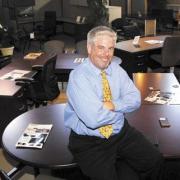
“Always use Common Sense.” That marketing slogan neatly sums up the philosophy Craig Caswell has used to guide his business. Caswell opened Common Sense Office Furniture in 1997 and that guiding principle has helped him to build his firm into one of the largest office furniture dealers in Central Florida. Based in Orlando, Common Sense Office Furniture offers design, sales, delivery and installation of new, used and remanufactured office furniture out of its more than 30,000 sq. ft. showroom and warehouse. Common Sense has become known for the excellent value and service they provide and today’s cost consciousness has made their offerings even more popular. A key element of the firm’s business growth strategy and common sense approach has been to utilize the services of the Small Business Development Center at UCF. According to Caswell, “Nowhere are there valuable services and advice available, at no charge, like at the SBDC and Advisory Board Council. They are a great tool to grow a business and get advice that otherwise you may never have access to…”.

image (4)Caswell has utilized the services of the SBDC’s Procurement Technical Assistance Center and in 2010 he joined CEO XChange, a CEO roundtable group, but the Advisory Board Council (ABC) was the first SBDC program to attract his interest. In fact, his first interaction with the ABC was when he signed up to donate his time and expertise to help other business owners by serving as a volunteer advisor for the program in early 2008. Yet, as Caswell learned more about the ABC and the next level business assistance it provides he thought it would be a useful tool to help propel his own business growth.

Later that same year Common Sense Office Furniture became a client of the Advisory Board Council. Caswell worked with ABC Program Manager, Jill Kaufman, to identify areas of opportunity and challenge facing his business. Kaufman formed a board of advisors for Common Sense to address the firm’s strategic planning, marketing, sales management and training, operations and business development. According to Caswell, “The board members all had backgrounds directly related to the operations and sales parts of my business and they understood each component. I never could have afforded this kind of advice without the SBDC.” The Advisory Board Council worked with Caswell to take a more strategic view of his business, build a stronger business foundation and lay out a roadmap for business growth. “One of the missing components they helped me identify was a lack of consistency and follow through on ideas, projects and marketing as we were caught up in the day to day trials of running a small business,” commented Caswell. “The Advisory Board helped me pull my head out of the sand, take a look around and find a path that would lead to future growth.”

Common Sense Office Furniture’s advisory board has proven so advantageous to the business that Caswell requested and was approved to remain in the program for a second term. Throughout Common Sense’s tenure in the ABC the firm has demonstrated strong growth in revenue and their number of employees has doubled from six to twelve, strengthening the firm’s organizational structure and allowing Caswell to focus on expansion opportunities. The company has refined its marketing strategy and increased its visibility in the community. In fact, the business received significant exposure when Common Sense Office Furniture was named to the 2010 Inc. 5000 list of fastest growing private companies in the U.S. due to its 41% 3-year revenue growth. Upon learning of this honor Caswell recognized the contribution of the SBDC. “The SBDC has been instrumental in helping me grow my business for the past two years. This is evidenced by the inclusion of our company in the Inc. 5000 list of fastest growing small businesses this year.”

Global Trading & Sourcing Corporation

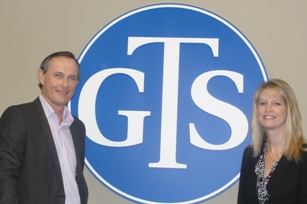
image (1)Global Trading & Sourcing Corporation (GTS) has “put the pedal to the metal” and is significantly accelerating its growth despite a balky economy. With assistance from the Small Business Development Center at the University of Central Florida (SBDC at UCF) and its Growth Acceleration Services, the company is experiencing double-digit growth in its revenues. A specialized procurement services company located in Orlando, GTS delivers cost-effective original equipment manufacturer (OEM) solutions by shortening the supply chain and enhancing customer procurement performance.


In October 2011, GTS was in a period of expansion and sought out the assistance of the SBDC’s Growth Acceleration Services to assist them in achieving their full growth potential. The Growth Acceleration services are designed to provide in-depth professional business consulting at no cost to qualified emerging and growth businesses in Florida, delivering the tools, strategies and expertise businesses need to accelerate the growth and success of their business in today’s competitive market.

The SBDC Growth Acceleration consultant worked with GTS by performing a detailed business health assessment, including an in-depth financial analysis that identified strategies to enhance cash flow to support further growth. After receiving the health assessment from the Growth Acceleration Services consultant, Andrew Vandendriessche, President of GTS, said, “It was invaluable for me to get an outside and impartial opinion on what we are doing well and not so well. The SBDC’s recommendations are very practical and achievable and we will be focusing on implementing them as we move forward. Not only is  the content of the report very useful, but also our Growth Acceleration consultant’s opinions and analysis while discussing it helped put a lot of  things in perspective.”

GTS took quick action in implementing many of the recommendations provided by the SBDC Growth Acceleration consultant. Since the initial meeting with the SBDC, the Company’s sales force has increased 30% and it is on track to exceed sales targets for 2012. “The information and tools provided were instrumental in quantifying what we needed to do to achieve our growth goals.” said Vandendriessche.

The Florida SBDC’s no-cost Growth Acceleration services are available to companies throughout the state. To qualify for the services, the company must have growth as a goal, be in operation for at least three years, have annual revenues ranging from $500,000 to $10 million, and employ five or more workers. Florida SBDC Growth Acceleration consultants are available statewide to provide assistance to qualified emerging and growth business who are looking to advance. Specifically, the SBDC at UCF Growth Acceleration services consultants will provide high level consulting of 50 – 100 hours (fair market value of over $10,000) to help qualified SMEs develop sustainable growth strategies.

For more information about the SBDC’s Growth Acceleration services, contact SBDC at UCF Regional Director Eunice Choi at 407-420-4850 or echoi@bus.ucf.edu.

ConTech Construction

Rock Solid: Concrete Contractor Stronger than Ever with Help from the SBDC at UCF’s Advisory Board Council

In classic entrepreneurial style, Alan Haughey and his wife Joan started ConTech Construction in 1993 in the living room of their Orlando home.  At its founding, the firm was a general contractor and concrete contractor that employed a staff of three.   Today, ConTech has offices in Winter Garden, employs a full time staff of 62, and Alan and Joan are joined in the business by their son Jeff.

ConTech’s success has come about in large part as a result of the solid reputation for integrity, collaboration and high performance that the Haugheys have built for the company.  In fact, ConTech’s name is so esteemed in the industry that 92% of the firm’s work comes from repeat business and direct referrals.  Alan Haughey’s more than 35 years in the concrete industry has enabled him to establish many long term relationships with clients and industry-leading firms.  That, combined with the firm’s strong financial standing and bonding capacity of over $10 million, has enabled them to take on larger jobs.

ConTech’s projects can be seen all over the region including Winter Garden City Hall, Uptown UCF, SunTrust Plaza and an eight-inch thick ice floor at Amway Arena.   The firm has poured over 160,000 cubic yards of concrete ranging from theme park rides at Disney World to a nuclear power plant and boasts a 99.998% rate of accuracy.

ConTech has won many accolades for their work.  Their $6.5 million restoration of the Royal Floridian Resort in Ormond Beach earned them 2011 Project of the Year by the International Concrete Repair Institute.   The firm has also received the Eagle Award from the Associated Builders and Contractors for excellence in construction of the Winter Garden City Hall.

Alan Haughey believes that “innovation and modifying your business to keep up with ever-changing realities” are keys to ConTech’s success.  Joan and Alan took action on this belief when they sought the assistance of the Small Business Development Center at UCF’s Advisory Board Council (ABC) in 2007.  “For me, joining the Advisory Board Council was our first major step in the process of working on the business rather than in it,” said Alan.  “We were so overwhelmed with the day-to-day operations that it was very difficult to focus on the strategic business changes that we needed to make to survive in a changing economy.  That’s why we sought out help from an advisory board at the SBDC.”

Jill Kaufman, the ABC program manager, worked with ConTech and hand-picked a board of volunteer advisors for the firm comprised of professionals in the fields of finance, business development, human resources, succession planning and law who were willing to donate their time and energy to working on the board.  According to Haughey, “The people who were on the advisory board were absolutely expert in their fields and they encouraged us to look at everything we do rather than just operations.”

The business graduated from the ABC program at the end of 2008, and Haughey points to three topics that were focused on with the board as crucial contributors to the company’s ongoing success: the need to diversify the client base, succession planning and development of a marketing plan.   When ConTech experienced the impact of the recession and downturn in the construction market, they were prepared to make changes which enabled the firm to rebound.

“What we did was take the seeds that were planted from the board and we started making continual changes in the company based on insights we gleaned from those folks,” commented Haughey.   Some of the changes that grew out of the work with their advisory board include a rebranding effort, new lines of business and a new business focus.

Today, ConTech specializes in concrete restoration with a greater focus on hospitality industry projects and has rebranded itself as ConTech Restoration.   Existing structure renovation projects include condos, timeshares and parking structures. The company has also expanded their scope of work and now offers commercial painting and waterproofing.  From 2009 to 2011 ConTech added 49 jobs and realized a 63% increase in revenue.

Haughey encourages other business owners to also take proactive steps for their business.  “I would absolutely recommend the SBDC at UCF’s Advisory Board Council to other businesses,” remarked Haughey.  “An advisory board helps a business owner fast track changes in his business because the board members have ‘been there and done that’ and their advice allows the business owner to learn from their years of experience.”

Founded with the purpose of strengthening Central Florida’s economy, the Small Business Development Center at the University of Central Florida conceived and developed the Advisory Board Council in 2003 to help small businesses reach the next level.    Funded by Orange County Government since the program’s inception to facilitate sustainable revenue and job growth, the Advisory Board Council provides established businesses with no-cost advisory boards comprised of area professionals who volunteer their expertise.

The ABC has found an extremely cost effective model to tap into community resources for the benefit of small businesses.  The program’s $100,000 annual budget is modest compared to the economic impact achieved by its participating companies.  The program has formed over 150 advisory boards for Orange County businesses, which have achieved $72.4 million sales increase, 1,968 jobs created and retained, $15 million in capital formation and $62.3 million in government contracts obtained.

Magic Ink Artisans

Orlando Entrepreneur Poised for World Expansion

From a career CPA to a temporary tattoo retailer, Gary Gillstedt’s entrepreneurial success is no ordinary story…Gary had been working as a CPA for a construction company in Michigan where one of his major clients happened to be involved with construction efforts on the France and Canada pavilions for the Epcot® project at the Walt Disney World® Resort. During the six months of working onsite in Orlando with the client and visiting Florida on more than a few vacation trips with his family, Gary became acquainted with a business owner who was seeking to sell his well-established venture. In December 1999, Gary decided to purchase the five-year-old business, Magic Ink Artisans – a retail service specializing in applying temporary tattoos on visitors at local theme parks.

“Simply, I would not have survived without the SBDC’s help.”

Gary Gillstedt
Magic Ink Artisans

With a steady market demand, Gary’s newly acquired temporary tattoo service continued to grow at a steady pace until the disaster of September 11, 2001. Tourism to Orlando declined sharply and Magic Ink Artisan’s sales in September and October were down by 85% and showed no signs of recovery. Within just a few months, Gary could no longer draw a salary for himself, fell behind on his installment payments to the seller and depleted his saving and credit line.

Suffering from a severe cash crunch, Gary sought technical assistance from the Small Business Development Center at UCF in January 2002. The SBDC’s Eunice Choi met with Gary and helped him obtain the SBA’s Economic Injury Disaster Loan. For Gary, it was the right move at the right time, and within a very short period the economy and business in general took a turn for the better.

“I do not feel very much like a success story that I want to shout off mountaintops about it as much as I feel sympathy and remorse for all of my fellow vendors in the theme park industry who did not make it,” Gary said, when reflecting on that period of his career.

Since receiving the disaster loan, Gary has continued to seek business consulting services from the SBDC at UCF. To this day, Eunice Choi as served as a mentor and provided third party opinions as Gary worked to strengthen and expand his business. The SBDC assistance Gary received ignited his philanthropic perspective. When Eunice Choi asked Gary to serve on the Entrepreneur Advisory Board of the Disney Entrepreneur Center, he agreed immediately to help his entrepreneur peers. “Simply,” Gary said, “I would not have survived without the SBDC’s help. I would like to repay the community.”

It’s been almost a decade since Gary’s dream of owning his own business inspired him to make a move from the mid-west to the sunshine state. Today, Magic Ink Artisans has 11 kiosk locations across Walt Disney World® Resort including Animal Kingdom, Blizzard Beach, Disney Hollywood Studios, Downtown Disney, and Typhoon Lagoon. Gary’s insatiable innovative spirit has led him to add a new line of interactive guest service. In May 2009, after more than a year of extensive research and development, Gary invested in BeadforLife, a project which sells beads made from recycled paper by Ugandan women. Gary was inspired by the eco-friendly and philanthropic message of BeadforLife and introduced the fun of stringing African beads into bracelets and necklaces to his current product mix. With this new project and working in tangent with Disney, Gary’s company is poised to enter the global market.

Turf Athletics

Batter, batter, batter…swing.

The familiar sound of a baseball bat hitting a ball is unmistakable. It was a familiar sound John Denny could not live without. A retired professional baseball player, Denny played on several teams throughout his career, most notably the Seattle Mainers. But, after the birth of his daughter, he wished for a quieter lifestyle that would include spending time with his family and watching his children grow. John’s wife, Lore, wished for the same and also wanted more stability for their family. She was growing tired of moving to a new place and new home at the turn of every baseball season. However, because baseball was such an integral part of John’s life, he did not want to stop doing what he loved. The Denny’s decided opening Turf Athletics was the perfect solution.

“The most wonderful part of the business is that is a family business we get to watch our children grow while growing the business, it is definitely the best of both worlds and we are ecstatic.”

Lore Denny
Turf Athletics

In February 2007, Lore Denny contacted the SBDC at UCF’s assistant director Pauline Davis to discuss the idea of opening a batting cage facility. Over the next few months, Pauline worked with Lore to develop her business plan and financing. With the business assistance Pauline provided, John and Lore Denny then started the process of selection a location. Once again, Lore contacted the SBDC and Pauline offered guidance to Lore, making sure the location had the proper zoning and licensing, as well as any other special requirements.

In June 2007, Turf Athletics, a professional–grade baseball and softball training facility located in Winter Garden, opened its doors. It was very important to John for the facility to be top-quality and authentic, Turf Athletics equals or exceed any professional facility nationwide. The facility offers four professional size batting cages that can accommodate professional players. In fact, it is not unusual to see professionals practicing at the facility. The facility also includes a multi-use indoor turf and outdoor training facility, as well as a pro shop. In addition to the equipment, Turf Athletics offers baseball and softball instruction, birthday parties, and camps. The facility caters to players of all ages; individuals can reserve a cage or an entire team can reserve several cages.

Now that the business has been open for almost two years, John and Lore are still excited about the opening of the business. Because nothing is routine, every day brings an exciting challenge – from watching students surpass their athletic goals, to scheduling teams, or planning the next event. The couple also quickly found their place in the company. Lore is responsible for the marketing and management of the company – making sure everything runs smoothly, while John sticks to what he loves – baseball.

On a typical afternoon the parking lot is buzzing with parents dropping off kids for individual lesson or a meeting place for the team. The wonderful thing about the facility is the comfort of practicing indoors, seven days a week no matter what the weather is outside. The Denny’s are grateful to the community for their support and the opportunity to realize their dreams. Lore appreciates the assistance from the SBDC and says, “It has taken quite a bit of effort to get the business to this point and Pauline has been there offering business advice and encouragement. She has talked me through a few panic situations.” Lore also state, “The most wonderful part of the business is that is a family business we get to watch our children grow while growing the business, it is definitely the best of both worlds and we are ecstatic.”

Pesto Diva

Business Woman Takes Dreams to Next Level with Whole Foods Contract

Anna Mele loves to cook and started Pesto Diva in 1997, making nine flavors of pesto for sale every Saturday at the Winter Park Farmers Market. This all-natural Pesto became a popular local item. The big break to take her business beyond the farmers market came in 2008 when a Whole Foods representative and regular customer expressed interest in offering her pesto in two Central Florida stores, Winter Park and Dr. Phillips.

“The counseling provided by the SBDC at UCF went beyond the business fundamentals… the personal involvement and mentoring was more important than the numbers.”

Anna Mele
Pesto Diva

From her home, Anna produced the 18 to 20+ cases per week to meet a demand that was growing. In early 2009,Whole Foods notified Anna of their desire to expand the distribution to all 16 stores statewide through their distribution center in Naples. A small business owner’s dream comes true? Anna now faced the real challenges of taking her business to the next level. Production was going to increase to 150 to 300 cases per month which required professional kitchen space, walk in freezers, container and ingredients inventory, employees, billing/invoicing, pallet size shipments and most importantly working capital.

Anna looked to the SBDC at UCF for assistance, she and SBDC counselor, Roger Greenwald, CBA, stepped back and prepared an operations plan detailing the needs, cost and time lines. Additionally, a financial pro forma was developed as a platform to secure necessary funding. Anna was successful in obtaining private funding enabling her to inventory containers, ingredients, rent kitchen space and have adequate working capital to produce and deliver an initial order exceeding 80 cases representing nearly 960 product units.

Hooah, LLC

Just 18 months after becoming a client of the Advisory Board Council, this interactive communications company achieves 265% revenue growth. Even while developing his creative talents in art school, Jorge Suria knew he wanted to be an entrepreneur. His dream of opening his own agency came to fruition in 2003 when he established Hooah LLC. An expression of high morale, strength and confidence popular in the military, Suria thought Hooah would be an ideal name for his firm which provides marketing, IT and video production services to clients such as the U.S. Army, Army National Guard and Army Reserves.

“There is a direct correlation between the board’s involvement and our growth.”

Tanya Zeiher
Hooah, LLC

Hooah has been utilizing the services of the SBDC at UCF’s Procurement and Technical Assistance Center since 2007. In 2008, after attending an SBDC Advisory Board Council (ABC) Reception for Small Business Owners, Suria decided to apply to the program. “We wanted to have an advisory board because we saw potential for growth and the challenges it would bring and we wanted to get objective advice from people who didn’t have any personal interest in the company,” remarked Suria. When Hooah applied to the Advisory Board Council there was some discussion on the firm’s readiness for the program as they barely met some of the ABC’s eligibility guidelines. However, the company was working hard to reach their potential and was certified as a Minority Business Enterprise and had just been granted Small Disadvantaged Business 8(a) status by the U.S. SBA. Jill Kaufman, ABC Program Manager, decided to accept Hooah as a client and began work on their board formation.

According to Suria, “One of the most valuable aspects of working with the Advisory Board Council is the fact that they specifically tailored Hooah’s board to our company’s needs. He continued, “I can’t imagine putting together a board without the SBDC’s help.” Some of the projects Hooah sought help with from their board include: contract negotiations and contract review; putting proper accounting systems in place; determining cost and price structures; and mapping out their business development strategy. According to Hooah vice president, Tanya Zeiher, “The board has helped us at a strategic level to map out our growth strategies and really hone in on what we do and who we are. They helped us define our strengths and clarify the areas of service we should focus on.” In addition, Hooah’s board recommended the company rebrand itself, re-position the firm in the marketplace and determine where they needed to focus the business. Some of the board’s best advice surrounded Hooah’s business development plan. Suria commented, “The board helped us create a very effective business development strategy which enabled us to branch into and win work in the utilities sector, a new industry segment for us.”

Today, Hooah is one of the fastest growing companies in the entire ABC program. “There is a direct correlation between the board’s involvement and our growth,” remarked Zeiher. Revenues have jumped 265% to $2 million and in 2010 the firm expects to double its sales again. Hooah has also tripled its number of employees and hired 10 new staff members. The firm targets federal and local government work and also serves large private sector organizations. In August 2009, Hooah opened a branch office in Arlington, Virginia to better serve their growing clientele in Washington, D.C. That office employs a staff of five information technology professionals. One of their main projects has involved managing a large internal website for the Army National Guard called Virtual Armory.

Engineering & Computer Simulations (ECS)

Waymon Armstrong, president and CEO of Orlando-based Engineering and Computer Simulations, Inc., (ECS) was named the 2010 National Small Business Person of the Year by the U.S. Small Business Administration during National Small Business Week in Washington, D.C. on Tuesday, May 25.

President and CEO of ECS, Waymon Armstrong, Named 2010 Small Business Person of the Year

A client of the Small Business Development Center at UCF (SBDC at UCF), the SBDC at UCF honored Armstrong, his family and ECS staff for being named Florida’s 2010 Small Business Person of the Year during the SBDC’s small business awards luncheon at the Citrus Club on Tuesday, May 18. Armstrong, who started ECS in 1997, experienced challenging times in the early years of business. After the 9/11 tragedy it became impossible for Armstrong to make payroll and he was forced to layoff employees. To keep ECS afloat, Armstrong deferred his salary for more than three years. To overcome the challenges he faced, Armstrong actively sought assistance from the SBDC at UCF in 2003 including participation in the Center’s six-part strategy planning workshop series. The six-part program, sponsored by Orange County Government, was designed to assist established business owners with analyzing the external environment and competition, building a unique brand, developing collaborative relationships to build a competitive advantage, determining capital needs, and evaluating and developing corporate resources and direction. Through his determination to succeed, Armstrong focused on developing long-term strategies. By 2008, ECS doubled its revenues and has seen a 640% sales growth over the past three years.

Today, ECS is one of Inc. Magazine’s 500 fastest growing private companies in the nation. “Waymon Armstrong is truly deserving of this prestigious national award. He is an extraordinary entrepreneur and is an ideal role model for small businesses across the nation. Congratulations to Waymon and all the employees at ECS,” said Thomas L. Keon, dean of the UCF College of Business Administration. “I also applaud Eunice Choi and her staff at the SBDC for their continued success working with clients.” ECS is a leading provider of gamed-based simulation systems and interactive performance assessment tools that train emergency medial personnel and emergency management teams from different jurisdictions to cooperate in the event of a natural disaster, and simulation training programs that teach unmanned vehicle operational personnel procedures to launch and operate unmanned vehicles. ECS currently employs 45 people and recruits from the Central Florida talent pool.